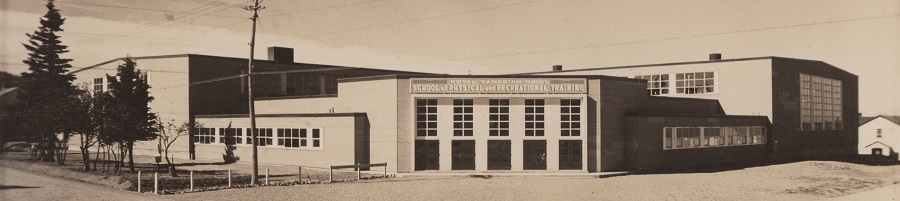
For more than 50 years, the grounds of Canadian Forces Base Cornwallis echoed with shouted commands, marching boots, and the intensity of military life.
Then, in 1994, it all stopped.
What followed wasn’t abandonment—it was one of the most remarkable transformations of a military site in Canada.
The End of an Era
When CFB Cornwallis closed, it marked the end of:
- Canada’s primary English-language recruit training centre
- A site that processed hundreds of thousands of military personnel
- A defining institution for generations of service members
For the surrounding region, the closure was a shock.
Cornwallis wasn’t just a base—it was an economic engine and a cultural anchor.
Its loss meant:
- Jobs disappearing overnight
- Local businesses struggling
- A community forced to rethink its future
Reinventing a Military Giant
Rather than letting the site decay, a bold decision was made:
Reinvent it.
The former base was redeveloped into what is now known as
Cornwallis Park
This wasn’t a simple conversion—it was a complete reimagining.
From Barracks to Neighborhoods
The transformation was physical, visible, and symbolic.
Where recruits once lived under strict discipline:
- Barracks became residences and apartments
- Officers’ quarters turned into family homes
- Mess halls found new life as community spaces
The same buildings that once housed thousands of trainees were now home to civilians, families, and newcomers.
A New Kind of Training Ground
Even as military training ended, Cornwallis remained a place of learning.
The site became home to institutions like the
Pearson Peacekeeping Centre
Here, the focus shifted from:
- Preparing for war
to:
- Promoting peace
- Training for international cooperation
- Supporting global stability
It was a profound shift in purpose—one that reflected Canada’s evolving role in the world.
A Place of Second Chances
In its new life, Cornwallis Park also took on a humanitarian role.
The same infrastructure built for military efficiency was used to:
- Temporarily house refugees
- Support resettlement efforts
- Provide a safe starting point for those arriving in Canada
It became, in many ways, a place not of command—but of compassion.
Preserving the Past
Despite the transformation, echoes of the past remain.
- Streets and buildings still reflect their military origins
- Layouts designed for efficiency still shape the community
- Memories live on through museums and former personnel
Organizations like the
Cornwallis Military Museum
help ensure that the story of the base—and those who trained there—is not forgotten.
A Different Kind of Legacy
What makes Cornwallis unique is not just what it was—but what it became.
Few places undergo such a complete shift:
- From discipline to daily life
- From military order to community freedom
- From preparing for conflict to supporting peace
Today, children play where recruits once drilled.
Families live where sailors once trained.
And a place built for war has found new purpose in peace.
Final Thought
The story of Cornwallis is not just about closure.
It’s about adaptation.
It’s about a community refusing to let a defining piece of its identity disappear—and instead, reshaping it into something new.
From CFB Cornwallis to Cornwallis Park, the transformation stands as a powerful reminder:
Even the most rigid institutions can evolve—
and even places built for war can become places of life.