

The Cornwallis Wrens: A Forgotten Chapter of Local Wartime Service
Introduction
During the Second World War, communities across Canada contributed to the war effort in ways that extended far beyond the battlefield. One of the most remarkable — and often overlooked — contributions came from the young women who served in naval support roles. Among them were the Cornwallis Wrens, a group of women who trained and served at HMCS Cornwallis, the Royal Canadian Navy’s massive training base originally located near Digby, Nova Scotia.
Though overshadowed by the more widely known British Women’s Royal Naval Service (also called “Wrens”), the Canadian Wrens played a crucial role in keeping naval operations running smoothly. Their story is one of determination, discipline, and a quiet kind of heroism that shaped the wartime experience on the home front.
Origins of the Canadian Wrens
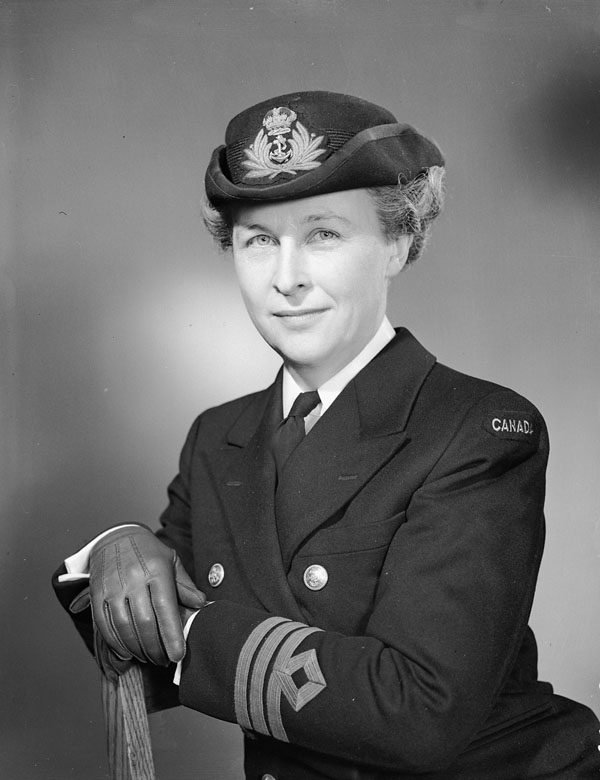
The Canadian Women’s Royal Naval Service (CWRCNS) was established in 1942, modeled after the British WRNS. The nickname “Wrens” carried over naturally, and soon became the common term for the women who enlisted.
Canada’s navy expanded rapidly during the war — from a small coastal force to one of the world’s largest. With thousands of sailors needing training, administration, communications, and logistical support, the navy turned to women to fill critical non‑combat roles.
HMCS Cornwallis became one of the central hubs for this new workforce.
HMCS Cornwallis: A City Within a Base
When HMCS Cornwallis opened in 1942, it was the largest naval training facility in the Commonwealth. It operated like a self‑contained city:
- Barracks
- Drill halls
- Classrooms
- A hospital
- Workshops
- A parade square
- Recreation facilities
Tens of thousands of sailors passed through Cornwallis during the war — and the Wrens were essential to keeping the base functioning.
Who Were the Cornwallis Wrens?
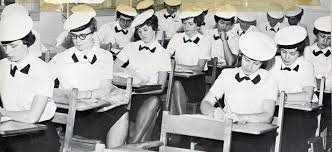
The Wrens stationed at Cornwallis were typically young women in their late teens and early twenties. Many came from small towns, farms, or coastal communities. For many, it was their first time living away from home.
They were drawn by a mix of patriotism, adventure, and the desire to contribute meaningfully to the war effort. The navy offered:
- Steady pay
- Training
- A sense of purpose
- Camaraderie
- A chance to break free from traditional expectations
Their blue uniforms, disciplined routines, and naval pride made them instantly recognizable on the base and in nearby towns.
Roles and Responsibilities
The Cornwallis Wrens filled a wide range of essential positions. They were not ornamental or symbolic — they were working professionals who kept the base running.
Communications
- Wireless telegraphy
- Coding and decoding messages
- Operating switchboards
- Maintaining signal logs
Administration - Personnel records
- Pay offices
- Training schedules
- Clerical work
Technical and Mechanical Support - Stores and supply management
- Equipment maintenance
- Motor transport operations
Instructional Roles
Some Wrens even trained male recruits in: - Morse code
- Signalling
- Clerical procedures
This reversal of traditional gender roles was striking for the time.
Life on the Base
Daily life for the Wrens was structured and disciplined, but also vibrant and social.
Routine
- Early morning wake‑up
- Inspections
- Drill
- Assigned duties
- Evening recreation or study
Recreation - Dances with naval trainees
- Sports teams
- Choirs and concerts
- Movie nights
- Trips into nearby towns
The Wrens formed tight-knit friendships — bonds that often lasted a lifetime.
Challenges and Realities
Despite the pride and camaraderie, the Wrens faced challenges:
- Long hours
- Strict discipline
- Harsh weather
- Occasional resentment from male personnel unused to women in uniform
- The emotional strain of wartime uncertainty
Yet they persevered, proving their competence and earning respect across the navy.
Impact on the War Effort
The Cornwallis Wrens freed thousands of men for sea duty by taking over shore-based roles. Their efficiency and professionalism helped streamline naval training and communications during the critical Battle of the Atlantic.
Their contributions were not glamorous, but they were indispensable.
Legacy
After the war, the CWRCNS was disbanded, and many Wrens returned to civilian life. Some married sailors they met at Cornwallis; others pursued careers shaped by the skills they learned in service.
For decades, their stories were overshadowed by the broader wartime narrative. But in recent years, museums, historians, and veterans’ groups have begun to recognize the Wrens as pioneers of women’s military service in Canada.
HMCS Cornwallis itself later moved to a new location near Deep Brook, but the legacy of the Wrens remains tied to the original wartime base.
Why Their Story Matters
The Cornwallis Wrens represent:
- Women stepping into new roles
- The modernization of Canada’s military
- The social transformation of wartime society
- The quiet heroism of service behind the scenes
Their story enriches our understanding of the home front and highlights the essential contributions of women whose work made victory possible.