Historical Timeline of HMCS Cornwallis & CFB Cornwallis
For Cornwallis Museum Online
This timeline preserves the full arc of Cornwallis—from its wartime origins to its modern legacy—and honours every civilian and Veteran whose life passed through its gates.
Pre‑History: The Name Behind the Base
1749 — Edward Cornwallis founds Halifax
The future base takes its name from Edward Cornwallis, the first governor of Nova Scotia, who established Halifax as a British stronghold. Nearly two centuries later, the Royal Canadian Navy would adopt his name for its major training establishment.
World War II Era
1942 — HMCS Cornwallis established in Halifax
- Created on 1 May 1942 at HMC Dockyard Halifax.
- Formed to relieve overcrowding at HMCS Stadacona and centralize naval training.
- Intended from the start to move to a purpose-built facility.
1942–1943 — Construction of the Deep Brook base - The Department of National Defence selects Deep Brook / Clementsport on the Annapolis Basin.
- Construction begins June 1942.
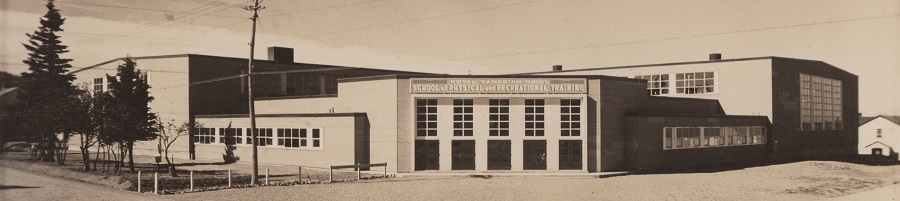
- Over 80 buildings erected, including barracks, drill halls, classrooms, and support facilities.
- Designed to handle unprecedented wartime training demands.
14 April 1943 — HMCS Cornwallis moves to Deep Brook - Official commissioning at the new site.
- Quickly becomes the largest naval training base in the British Commonwealth.
1943–1945 — Peak wartime operations
Cornwallis trains tens of thousands of sailors in: - New entry (basic) training
- Seamanship
- Anti‑submarine warfare
- ASDIC (sonar)
- Gunnery
- Engineering trades
- Chemical warfare defence
- Specialist training for the Women’s Royal Canadian Naval Service (Wrens)
Cornwallis becomes a vital engine of the Battle of the Atlantic.
Post‑War Transition
Early 1945 — Training ceases; becomes a Discharge Transit Centre
With the war ending, Cornwallis processes thousands of sailors returning to civilian life.
1 May 1949 — HMCS Cornwallis recommissioned
The Cold War demands a strong navy. Cornwallis reopens as a major RCN training establishment.
Cold War & Unification Era
1950s–1960s — Expansion and modernization
Cornwallis becomes the central hub for:
- Naval recruit training
- Technical trades
- Leadership courses
- Training for female reservists (post‑1951)
The base grows into a self‑contained military community.
1 April 1966 — HMCS Cornwallis paid off
As part of restructuring ahead of unification, the naval establishment is formally decommissioned.
1968 — Canadian Forces unification
HMCS Cornwallis becomes Canadian Forces Base Cornwallis (CFB Cornwallis).
1968–1994 — Home of the Canadian Forces Recruit School
For over 25 years, Cornwallis serves as the primary basic training centre for English‑speaking recruits from all branches: - Army
- Navy
- Air Force
Hundreds of thousands of Canadians begin their military careers here.
Closure & Civilian Transition
1994 — CFB Cornwallis officially closes
Recruit training is consolidated at Saint‑Jean‑sur‑Richelieu, Quebec.
The base is transferred to civilian redevelopment authorities.
1995–2000 — Cornwallis Park established
The former base becomes:
- A residential community
- A business park
- A preserved historical site with many original buildings still standing
Cornwallis Military Museum Era
Late 1990s — Cornwallis Military Museum opens
Created to preserve the history of HMCS/CFB Cornwallis and display artifacts from:
- The wartime naval era
- The Cold War
- The Canadian Forces Recruit School
- St. George’s Chapel
2017 — Museum closes
The physical museum ceases operations.
Artifacts are dispersed or returned to their original custodians.
A central place of remembrance disappears.
Cornwallis Museum Online
2020s — Cornwallis Museum Online founded
Created to:
- Preserve the legacy of HMCS and CFB Cornwallis
- Honour the civilians, staff, and Veterans who served there
- Provide a digital home for stories, photos, and history
- Keep the memory of Cornwallis alive after the closure of the physical museum
This online museum stands as a living memorial—built by someone who trained there, for everyone who ever called Cornwallis part of their story.
Legacy Today
Cornwallis remains one of the most influential military training sites in Canadian history:
- Over 500,000 trained across its naval and tri‑service eras
- A defining institution for generations of Canadian Veterans
- A community shaped by service, discipline, and shared experience
Cornwallis Museum Online ensures that legacy endures.